


The right executive assistant gives you more time to focus on the work only you can do. Here are practical ways to get more out of the partnership, for CEOs and the assistants who support them.
If you’re a CEO, you take on more than most. Hiring an executive assistant is one of the highest-leverage moves you can make, and the numbers show why. Executives spend an average of 16 hours a week on manual administrative work, or two full working days, and managers spend only about 15% of their time planning ahead. A good executive assistant hands those hours back.
When you have that support in place, you can focus on the tasks that matter most. This guide covers practical ways to make the partnership work, whether you’re the CEO doing the hiring or the EA looking to grow in the role.
- Hiring an executive assistant helps busy leaders focus on critical tasks and work more efficiently.
- Executive assistants bridge the gap between the CEO and the rest of the organization. The role calls for organization, communication, discretion, adaptability, and tech skills.
- EAs manage schedules, communications, travel, research, and projects, and they can do it remotely.
What is an executive assistant to a CEO?
An executive assistant to a CEO is a senior administrative professional who provides comprehensive support to a chief executive.
The role connects the CEO to the rest of the organization and keeps daily operations running. That support ranges from managing your schedule to helping you make decisions.
Key attributes and skill sets of an executive assistant.
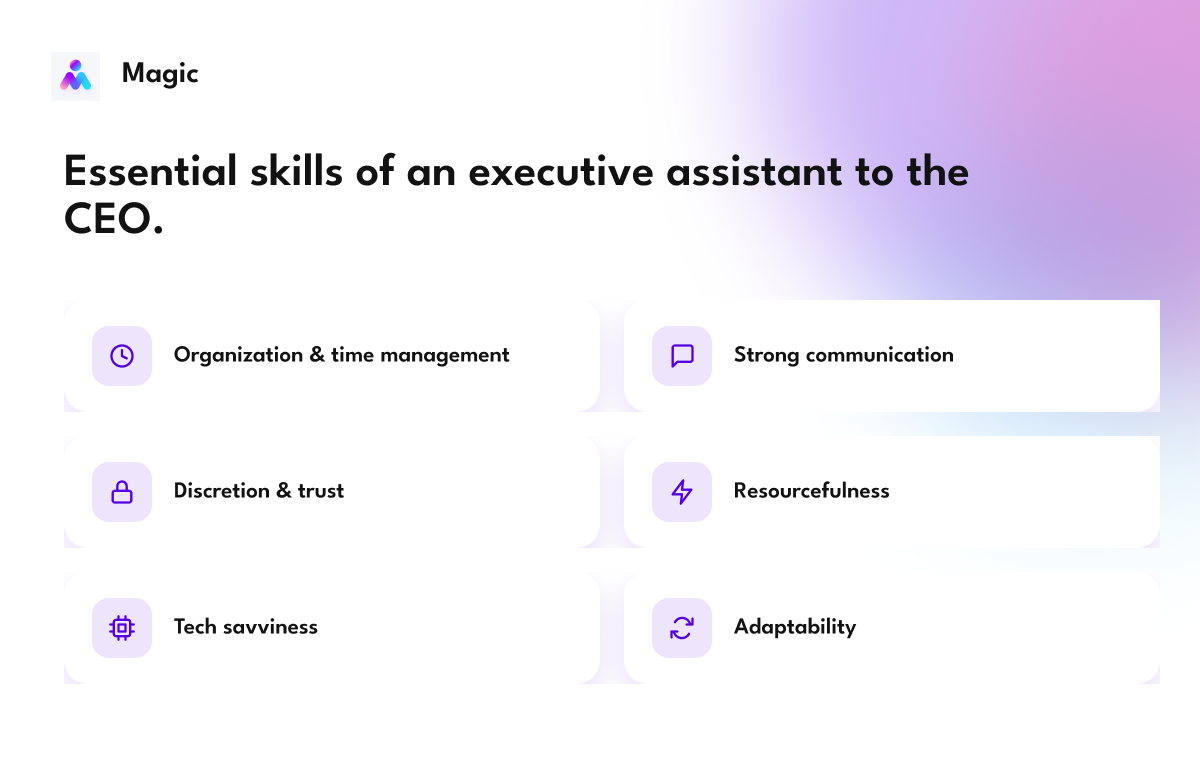
Looking for the right person for the job? A strong executive assistant brings a mix of technical and soft skills:
- Organization and time management: The ability to juggle many tasks and prioritize well.
- Strong communication: Clear writing and speaking, essential for managing correspondence.
- Discretion and trust: Handling confidential information with care.
- Resourcefulness: Finding solutions when situations get difficult.
- Tech savvy: Comfort with productivity tools and software.
- Adaptability: The flexibility to adjust when priorities shift.
What is the Role of the Executive Assistant to the CEO?
The role of the executive assistant has grown from being a traditional secretary to a strategic partner of the leadership team. Delegating tasks to an EA can help the CEO focus on what matters the most without falling behind on other tasks.
Today, EAs are integral to the executive team’s success, offering insights and solutions that shape the organization’s future. What’s more, they can now work remotely. This provides cost savings and offers flexibility and scalability to anticipate the needs of a busy executive.
What does an executive assistant to the CEO do?
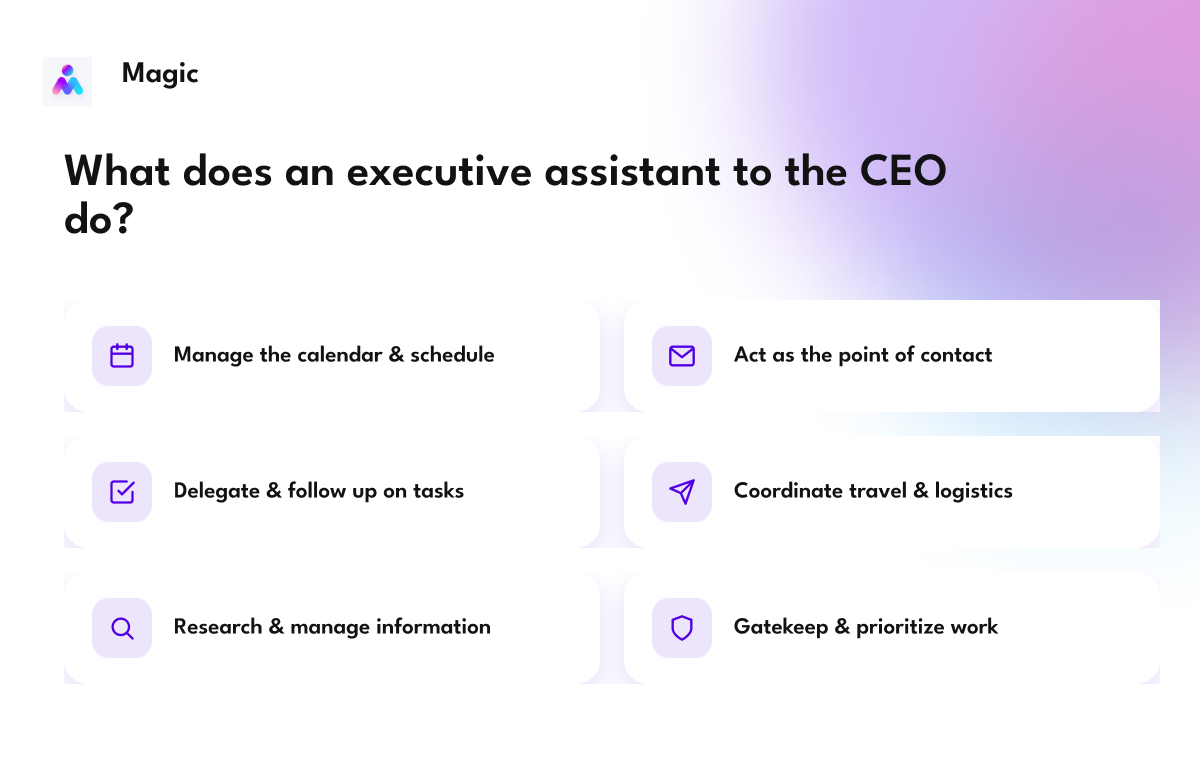
An executive assistant keeps the day running so the CEO can focus. The main responsibilities include:
Manage the CEO’s calendar and schedule.
The EA owns the CEO’s daily schedule, from meetings to travel. Good time management makes sure the CEO is in the right place at the right time, with their calendar lined up behind their priorities.
Act as the point of contact for the CEO.
The EA is the main point of contact for executives, employees, clients, and outside partners. They screen and respond to emails and calls on the CEO’s behalf.
To do this well, they sort out what needs immediate attention and what can wait, so the CEO stays focused on high-priority work.
Delegate and follow up on tasks.
A skilled executive assistant knows how to hand work to the right people and then follow up to keep it on track. They make sure projects get to the right team members and stay on schedule, and they keep the CEO updated on progress.

Coordinate travel arrangements and logistics.
The EA handles travel from start to finish, whether it’s a domestic trip or an international one. That means booking flights, arranging accommodations, and setting up appointments along the way.
Research and manage information.
CEOs need good information to make good decisions. An executive assistant gathers and sorts data, market trends, and industry insights, and prepares agendas and documents for the meetings and events the CEO attends.
Gatekeep and prioritize work.
There’s more coming at the executive team than any one person can handle, and the EA helps manage the flow. They filter requests and inquiries to protect the CEO’s focus, and they flag the matters that genuinely need the CEO’s attention.
For CEOs: getting the most from your EA.
The demands on an executive assistant are high. With a proactive EA working alongside you, you can stay focused on the right things. Here are a few productivity tips to help:
Don’t do everything yourself.
As a CEO, it’s tempting to stay involved in everything. You’re the leader, and you want things done right. But that mindset works against you.
Doing it all yourself leads to burnout, micromanagement, and less time for the decisions only you can make. You’re more productive when you focus on your core duties.
Trust your team to handle their roles, especially your EA, who has the skills to support you. That frees your time for strategy, innovation, and the company’s direction.
Embrace technology.
Technology helps CEOs streamline operations, improve efficiency, and make decisions backed by data. You don’t have to become an expert. You just have to be open to using the right tools.
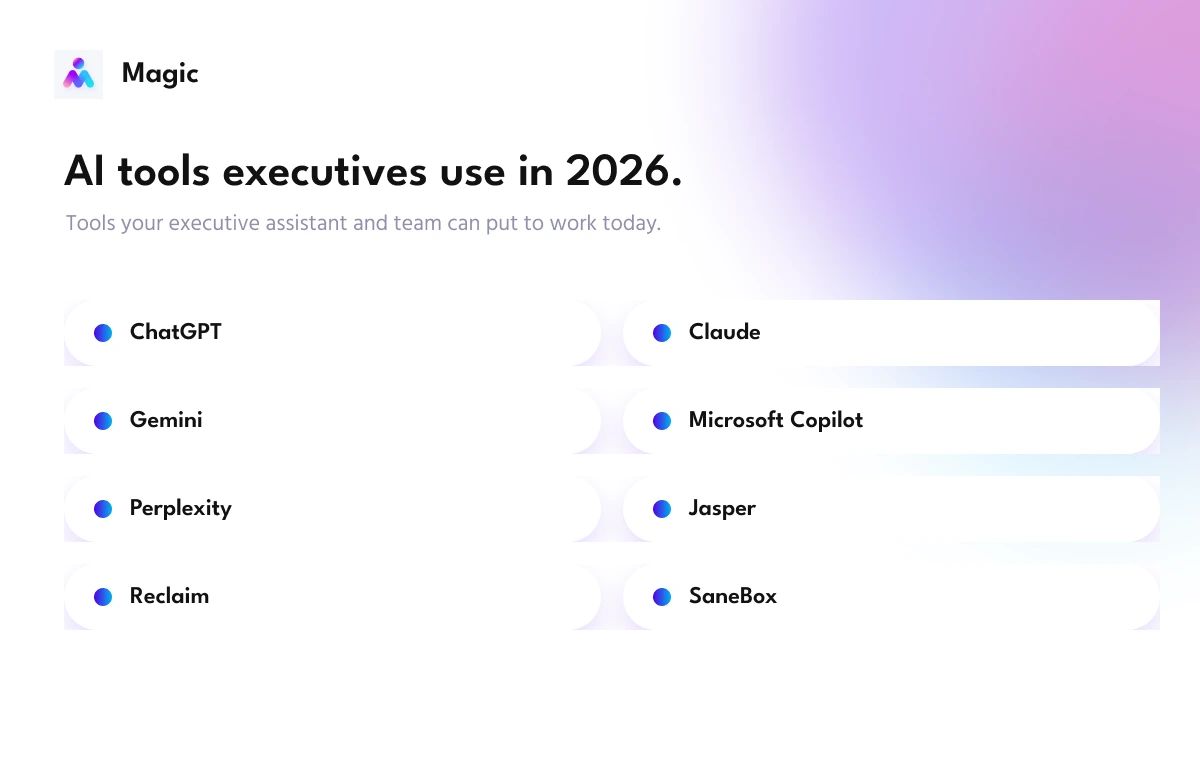
That might mean project management software for team collaboration or analytics tools to understand your customers. Leaders are moving fast here: frequent AI use among leaders rose from 17% in 2023 to 44% by late 2025, faster adoption than any other group at work. Popular AI tools include:
- ChatGPT
- Gemini
- Claude
- Jasper
- Descript
- DALL·E 3
- Midjourney
- Reclaim
- SaneBox
Even with strong AI tools, people still matter. It helps to keep a human in the loop, such as an EA, to check the work for accuracy.
Develop effective communication practices.
Clear communication is the foundation of good leadership. It’s how you keep your team, stakeholders, and clients aligned with your goals.
Spend time on the basics: active listening and honest feedback. Put communication plans and tools in place, and keep things open and transparent so people trust each other.
Your EA can’t read your mind. Share the company’s direction, progress, and challenges regularly, and tell them directly when they’re doing well, or when they’re not.
Let your EA enter your world.
Your executive assistant is a strategic partner, not just support staff. Share context so they can make good decisions on your behalf.
Meet with your EA regularly to talk through priorities, challenges, and goals. The more they see how you work, the better they understand what you need.
With that understanding, they can filter and prioritize tasks, manage your schedule, and represent you well, working alongside you toward the same goals.
For executive assistants: how to become indispensable to your CEO.
If you support a CEO, the difference between a good executive assistant and one a leader can’t work without comes down to a few habits. Here’s where to focus.
Anticipate instead of react. The best EAs solve problems before they reach the CEO’s desk. Watch for patterns in what gets asked of you, and prepare the next step ahead of time: the briefing, the follow-up, the backup plan.
Treat the calendar as strategy, not logistics. Protecting a CEO’s time means protecting their priorities. Group similar meetings, guard blocks for focused work, and push back on requests that don’t fit the quarter’s goals.
Get the gatekeeping balance right. Screen hard enough to protect focus, but not so hard that important things stall. When you’re unsure, pass it along with a recommendation rather than a blank question.
Earn trust through discretion. You’ll see sensitive information before anyone else. Handling it quietly and consistently is what turns you from a scheduler into a trusted partner.
Learn the business, not just the boss. Understanding what drives the company lets you make calls in the CEO’s voice, which is exactly what frees them to focus on the work only they can do.
Hire the Best Executive Assistants for a CEO with Magic
An executive assistant to the CEO serves as the middleman between you and outside your office. Their role is instrumental in optimizing your work and, by extension, the success of your organization.
By practicing masterful delegation, technology adoption, effective communication, and a strong partnership with your EA, you can elevate your productivity and lead your company to greater heights.
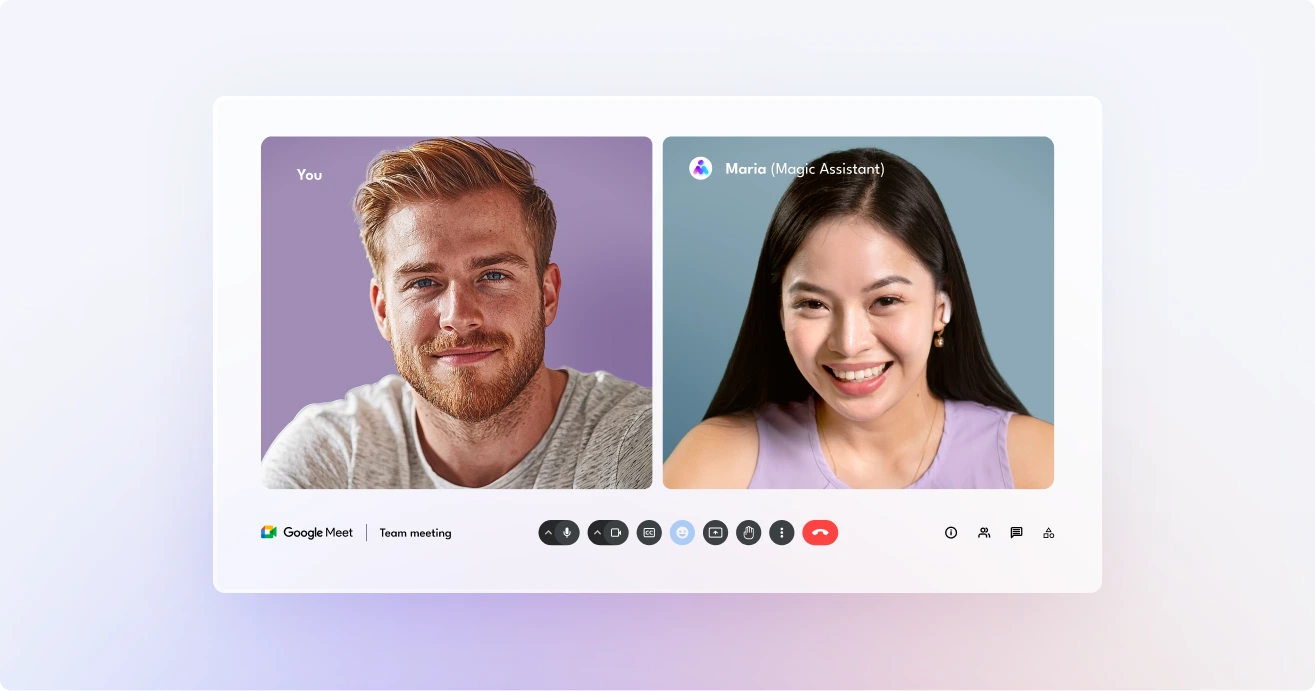
Let Magic find you the right executive assistant for your dynamic needs as a CEO. Our Magic EAs are from the top 1% of our talent and are trained to succeed using cutting-edge technology, including Magic AI.
Schedule a call with us today to talk more about how Magic can help you be a more productive and influential executive.